



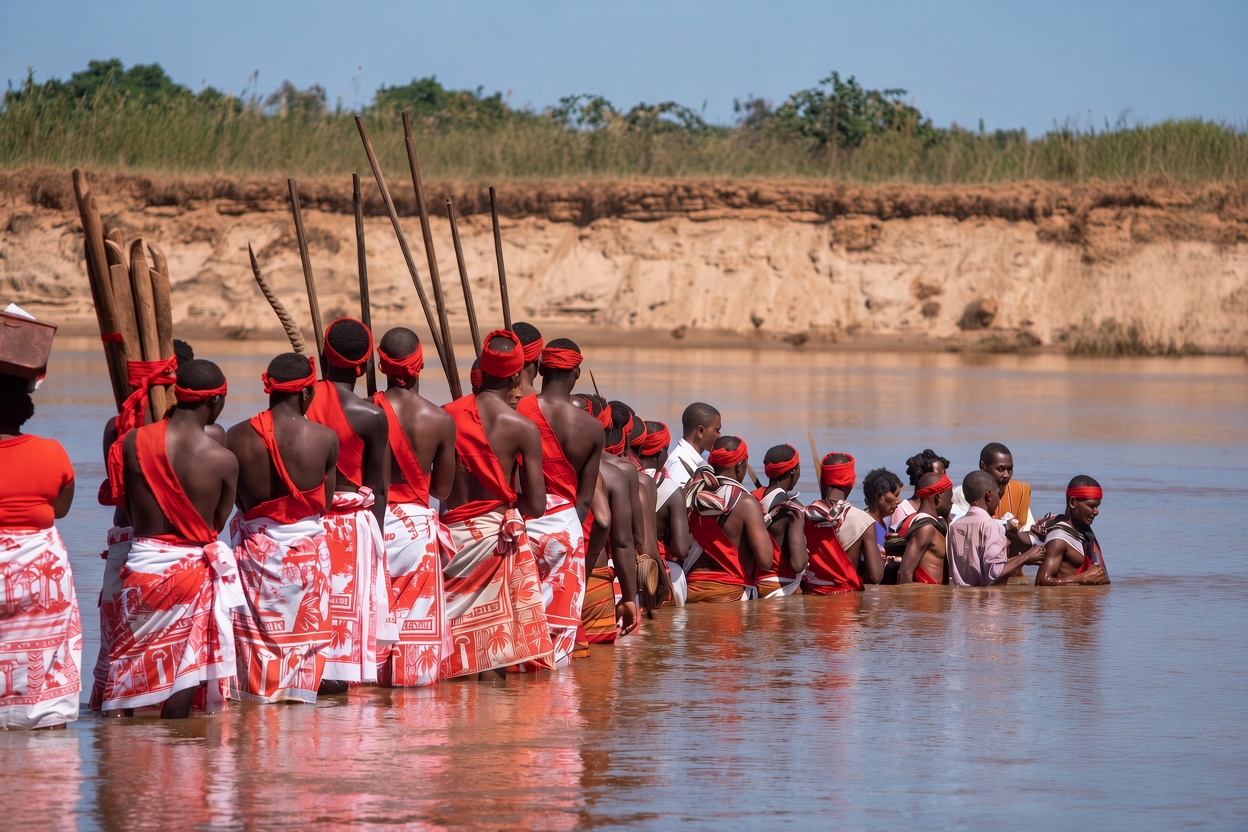
Fitampoha 2026 in Belo-sur-Tsiribihina: the return of King Toera to the heart of Sakalava culture
The cultural wealth of Madagascar takes on an exceptional dimension with Fitampoha 2026, which will take place from August 20 to 29, 2026 in Belo-sur-Tsiribihina, in the Menabe region. This great traditional sakalava ceremony will be special in more than one way. It will notably mark the symbolic return of the kabeso of King Toera, a sacred relic returned by France after more than a century of absence.
Fitampoha is one of the great spiritual and cultural events of the Sakalava people of Menabe. It brings communities together around royal relics, ancestors and a tradition passed down from generation to generation. In 2026, this ceremony takes on an additional historical dimension with the reinstatement of the skull attributed to King Toera among the royal relics of Menabe.
The Fitampoha, a sacred ceremony of the Sakalava people
The Fitampoha, often translated as the “bath of the royal relics”, is a major ceremony in the Sakalava tradition of Menabe. It is intimately linked to respect for former sovereigns and to the spiritual bond that unites the living to their ancestors.
The royal relics, called Dady, are kept in sacred places known as Zomba. They are at the center of ceremonies which allow Sakalava descendants and communities to maintain the continuity of the royal tradition.
Fitampoha should therefore not be considered as a simple folkloric event. It is above all a sacred ritual, deeply rooted in the history and spirituality of Menabe.
In 2026, the ritual will take on an even stronger dimension. The return of King Toera's kabeso completes the material memory of this ancient royalty.
Belo-sur-Tsiribihina, the sacred city of Menabe
The choice of Belo-sur-Tsiribihina is not trivial. Located on the banks of the Tsiribihina River, this city occupies an important place in the history of the Sakalava kingdom of Menabe.
Near Belo is Ampasy, a place associated with Fitampoha ceremonies. It is in this environment steeped in history that the royal rites are performed.
For several days, Belo-sur-Tsiribihina becomes an important gathering place. Representatives of royalty, Sakalava families and communities from different parts of Menabe come together around this ancestral tradition.
For visitors, this period allows them to discover a particularly authentic side of Madagascar. Above all, it offers an opportunity to understand that Malagasy heritage is still alive, transmitted and practiced today.
2026: the historic return of King Toera's kabeso
Fitampoha 2026 will probably remain as a special edition in the recent history of Menabe.
In August 2025, France officially returned three Sakalava skulls to Madagascar, previously preserved in French public collections and assigned to the National Museum of Natural History. Among them is the presumed skull of King Toera, sovereign of Menabe who died in 1897. The restitution followed an official request from Madagascar and the adoption in France of a legal framework allowing the restitution of human remains belonging to public collections.
For the Sakalava of Menabe, this return has a scope that goes far beyond the restitution of a historical object.
The Toera kabeso is considered a sacred relic. His return means the possibility of rediscovering an essential part of the sovereign's memory and placing it in its cultural and spiritual context.
This year, the Fitampoha will therefore place this relic in the continuity of the royal Dady of Menabe.
King Toera, a major figure in the history of Menabe
King Toera occupies an important place in Sakalava historical memory. His death in 1897 is directly linked to the period of French conquest of Madagascar.
After his death, his head was separated from his body and taken to France. For decades, then more than a century, the skull remained far from its original territory.
The 2025 restitution thus constituted a particularly symbolic moment for the Sakalava people. The return of this relic now makes it possible to envisage a reintegration into the royal traditions of Menabe.
Fitampoha 2026 therefore becomes the meeting point between history, memory, spirituality and heritage.
A 2026 edition placed under the sign of memory
The theme of Fitampoha 2026 naturally takes on a particular resonance with the return of Toera's kabeso. Malagasy sources also present this edition as an unprecedented event in the recent history of Menabe, directly linked to the restitution of the royal relic.
The goal is not just to celebrate the return of a relic. It is also about passing on a memory to younger generations.
Fitampoha allows elders to transmit traditions, stories, songs and knowledge related to Sakalava royalty. He reminds us that the history of Madagascar is not only found in books or archives.
The Fitampoha extends over several days and includes different rites. The days are punctuated by prayers, traditional songs, gatherings and ceremonies linked to royal relics.
The preparations themselves play an important role. The participants gradually arrive in Belo-sur-Tsiribihina and take part in the different moments of the ceremony.
The bathing of royal relics in the waters of the Tsiribihina constitutes the heart of Fitampoha. This ritual is accompanied by numerous traditional practices and a deep respect for the prohibitions linked to the sacred nature of the ceremony.
In 2026, this ritual will take on additional significance with the return of the kabeso attributed to Toera.
The Tsiribihina River will thus become the scene of a ceremony where current generations, former sovereigns and a history long separated from its land of origin will meet.
The Tsiribihina, a river at the heart of Sakalava culture
The Tsiribihina River is inseparable from the identity of this part of Madagascar.
It crosses the landscapes of Menabe and has long constituted an essential axis for local populations. Its banks, villages and landscapes accompany the daily life of many communities.
During Fitampoha, its importance also becomes spiritual.
The waters of the river participate in the ritual which gives its name to the ceremony. They thus become a central element of the relationship between royal relics, ancestors and the territory.
This dimension also allows us to understand why a trip to Menabe is not just about discovering the landscapes.
It is also about discovering a cultural territory, shaped by its history and the traditions of its inhabitants.
An exceptional immersion in Sakalava culture
Attend Fitampoha 2026 can represent an exceptional cultural experience for travelers interested in the history of Madagascar.
But this discovery must be made with respect.
Fitampoha is a sacred ceremony and certain times, certain places and certain practices are subject to precise rules. Visitors must therefore follow the instructions of traditional authorities and respect the fady, or cultural prohibitions.
- It’s not about coming to see a show.
- It is about being present with discretion, understanding the context and respecting a tradition which belongs above all to the Sakalava people.
This approach allows you to discover an authentic culture without reducing it to a tourist attraction.
Fitampoha 2026 perfectly illustrates the cultural wealth of Madagascar.
The Big Island is often known for its landscapes, its lemurs, its baobabs and its beaches. However, its cultural heritage is just as remarkable.
Each region has its traditions, languages, beliefs and ceremonies. In Menabe, the Sakalava heritage occupies a special place.
Above all, Fitampoha shows that this cultural wealth does not only belong to the past.
A historic event to be experienced with respect
From August 20 to 28, 2026, Belo-sur-Tsiribihina will therefore be at the center of an event which goes well beyond the borders of Menabe.
Fitampoha 2026 will be at the same time an ancestral ceremony, a cultural meeting and a historical moment marked by the return of the kabeso of King Toera.
After more than a century far from Madagascar, this relic returns to its original territory and must now join the sacred memory of the royalty of Menabe.
This edition will thus be an opportunity to celebrate ancestors, but also to pass on their history to future generations.
For those who wish to understand Madagascar differently, Fitampoha offers an exceptional gateway to Sakalava history and culture.
From August 20 to 29, 2026, Belo-sur-Tsiribihina will be more than ever a place of memory, tradition and transmission. A major step to discover the cultural richness of Madagascar and understand the soul of Menabe.

Comment (0)